The job this surface owns
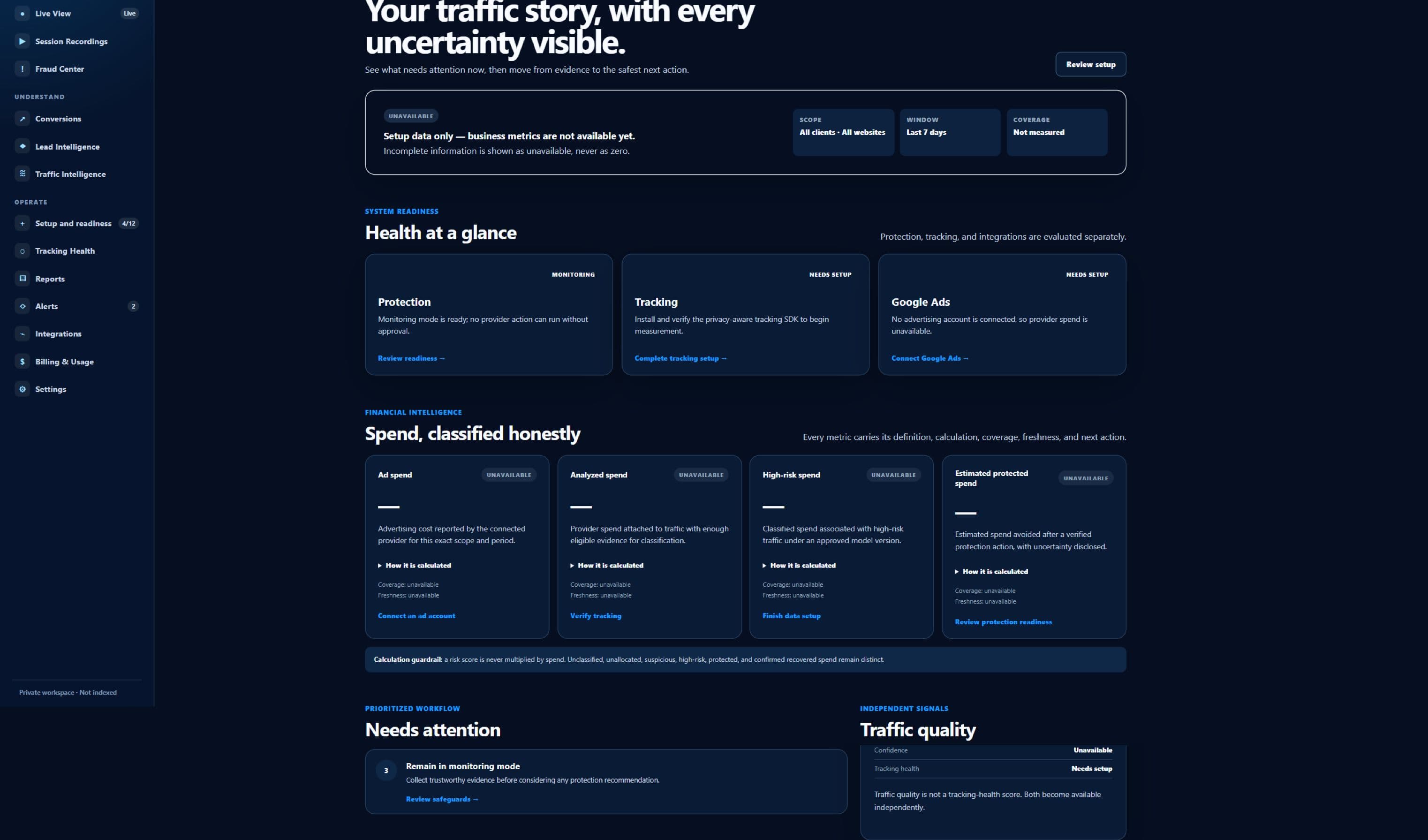
Command Center is designed for operators and leaders who need to know what requires attention before they interpret business performance. Its primary record is a prioritized, scoped operating summary linked to readiness, traffic, incident, conversion, lead, integration, and delivery evidence. That focus matters because a useful operating surface should answer a specific question before it asks a team to act. Here, the question is whether a team can trust the current view, investigate a change, repair a blocker, or move to a governed action. The answer stays attached to the evidence and scope that produced it.
Every Command Center card is intended to disclose its website, time range, timezone, filter, freshness, availability, coverage, and comparison basis. That scope travels with summaries, filters, exports, and follow-up links so a number is not separated from the population it describes. When the required evidence is absent, the interface should say that the answer is unavailable or incomplete instead of replacing it with an estimate that looks authoritative.
- Primary record: a prioritized, scoped operating summary linked to readiness, traffic, incident, conversion, lead, integration, and delivery evidence
- Decision supported: a team can trust the current view, investigate a change, repair a blocker, or move to a governed action
- Designed for: operators and leaders who need to know what requires attention before they interpret business performance
A deliberate evidence boundary
Command Center prioritizes readiness and attention; it does not turn an executive summary into a fraud verdict or hide missing inputs behind a zero. ClickGuardIQ preserves this distinction because a high-risk signal, an unusual pattern, a tracking defect, and confirmed invalid activity are not interchangeable findings. Each can change what an investigator checks next, but none should silently inherit the certainty of another.
A card should link to the exact module and scoped query that explains the change, preserving the return path to the operating summary. The operating record keeps source observations, calculated signals, human notes, decisions, provider responses, and verified outcomes attributable. Corrections create a history rather than rewriting the earlier state, which keeps later reporting and review understandable.
How it fits daily work
Cards fed by tracking streams, calculated signals, provider data, CRM state, and scheduled processing expose their own update time and completeness. This prevents a recent partial stream from being compared casually with a completed historical period. It also gives an operator a direct route to the underlying visitor, session, incident, conversion, lead, campaign, integration, or delivery record when more detail is justified.
Portfolio and client views respect delegated access, and sensitive visitor, security, provider, and commercial details are not exposed merely because a summary is visible. Access is therefore part of the product model, not an afterthought. Sensitive evidence, exports, provider actions, and administrative changes should remain limited to the appropriate website, client, role, and purpose, with an audit trail that explains who did what and when.