The integration job
The integration is intended to provide a governed Google Tag Manager installation path for the ClickGuardIQ browser SDK with property-specific configuration, consent-aware sequencing, version control, diagnostics, and acceptance checks. This page is designed for website owners, marketers, analytics teams, developers, agencies, consent owners, and administrators deploying ClickGuardIQ through Google Tag Manager. Its current public status is planned integration and deployment guidance, which remains visible beside the setup and operational workflow.
The provider or destination boundary is Google controls Tag Manager accounts, containers, workspaces, permissions, templates, publication, preview behavior, consent features, platform changes, and availability; the customer controls its website and container configuration. A directory listing, plan entitlement, configured credential, successful authorization, enabled toggle, or published tag is not evidence that the complete workflow is connected, healthy, current, or verified.
- Current status: planned integration and deployment guidance
- Audience: website owners, marketers, analytics teams, developers, agencies, consent owners, and administrators deploying ClickGuardIQ through Google Tag Manager
- Provider boundary: Google controls Tag Manager accounts, containers, workspaces, permissions, templates, publication, preview behavior, consent features, platform changes, and availability; the customer controls its website and container configuration
Scope and permissions travel with the connection
A deployment must bind the verified website and environment to the correct GTM account, container, workspace, tag configuration, consent approach, SDK version, allowed events, fields, and administrative owners. Credentials, tokens, secrets, account identifiers, client or website assignments, capability grants, consent, and permitted fields must remain scoped to the minimum authorized purpose.
Consent, Do Not Track, masking, exclusions, recording eligibility, field policy, sampling, and permitted purpose must be applied before or at capture; GTM publication does not override website privacy obligations. Setup, refresh, permission change, disconnection, administrative access, sensitive field use, delivery attempts, and other material operations should produce attributable audit history without exposing secret values in public pages, routine logs, alerts, or exports.
Operational state is evidence
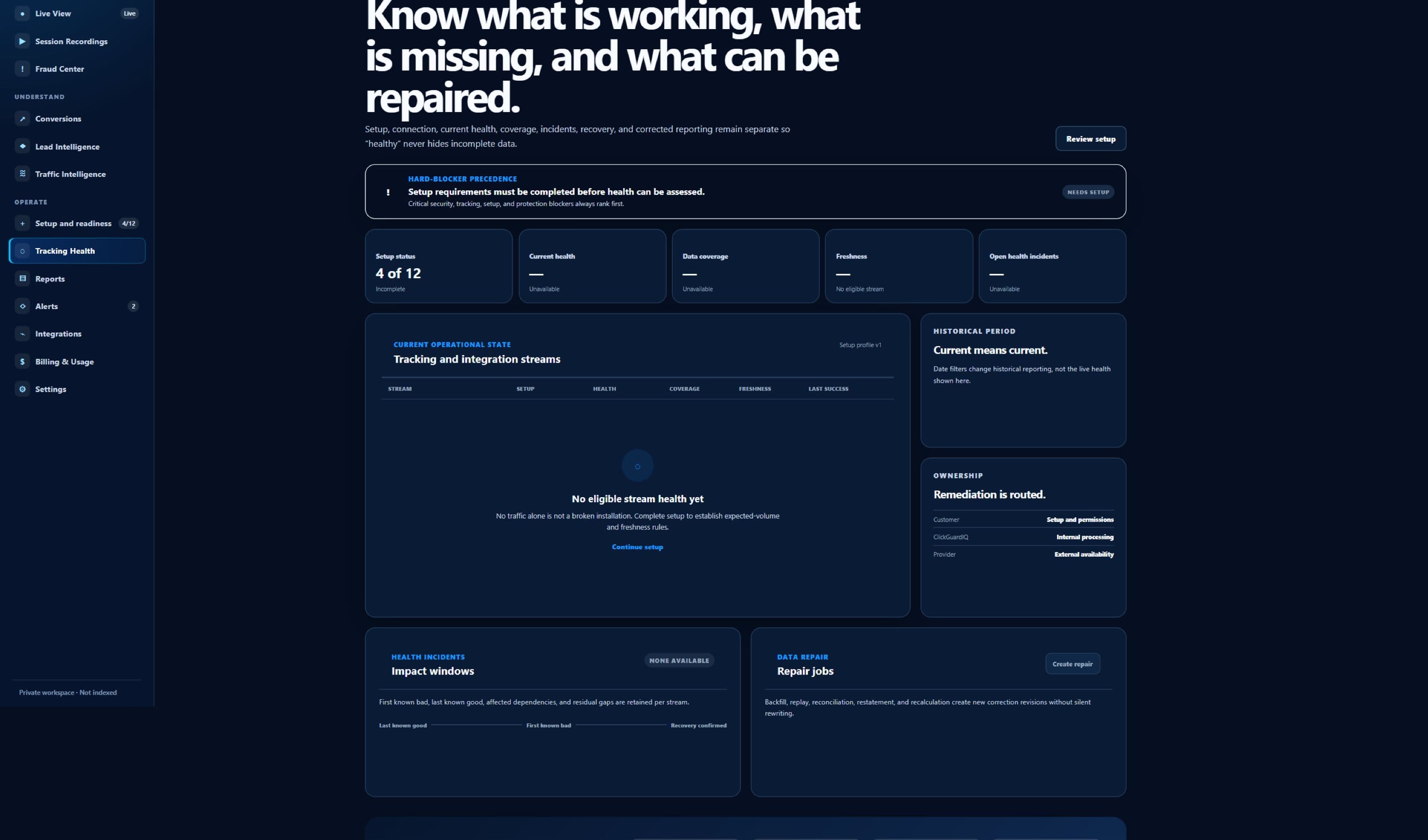
Deployment health should separate container and tag configuration, preview result, publication, page loading, SDK initialization, consent state, event capture, transmission, ingestion acceptance, processing, and reporting freshness. Connection health should identify the latest meaningful source and destination state, the time it was observed, expected freshness, current delay, error or limitation, retry or recovery status, and affected capability.
A published GTM container or firing tag does not prove that the intended website uses the right configuration, privacy state, event contract, accepted delivery path, complete coverage, or current data. When the product cannot verify a field, permission, data flow, provider response, downstream receipt, application, or reversal, the honest state is planned, configured, delayed, degraded, failed, unavailable, unknown, or externally controlled—not connected or successful by inference.